UAE Cybersecurity Warning: How to Spot and Avoid QR Code Scams in 2025
Learn how cybercriminals are using fake QR codes in public spaces across the UAE to steal personal and financial data, and discover expert tips to protect yourself.
By Vadim Kouznetsov, published
Key Takeaway
The UAE Cybersecurity Council has issued warnings about a significant increase in QR code scams where fraudsters place fake codes in public areas to steal personal and financial information. Always verify QR codes before scanning, check that URLs begin with “https://”, and never provide personal information on suspicious websites. If scammed, contact your bank immediately, scan your device, change passwords, and report the incident to authorities.
QR Code Scams Surge Across the UAE in 2025
A troubling new cybersecurity threat is spreading across the UAE as scammers increasingly exploit QR codes in public spaces to steal personal and financial data from unsuspecting victims.
The Cybersecurity Council of the UAE has recently issued an urgent warning about this growing trend, where cybercriminals strategically place counterfeit QR codes to redirect users to malicious websites designed to harvest sensitive information.
How the Scams Work
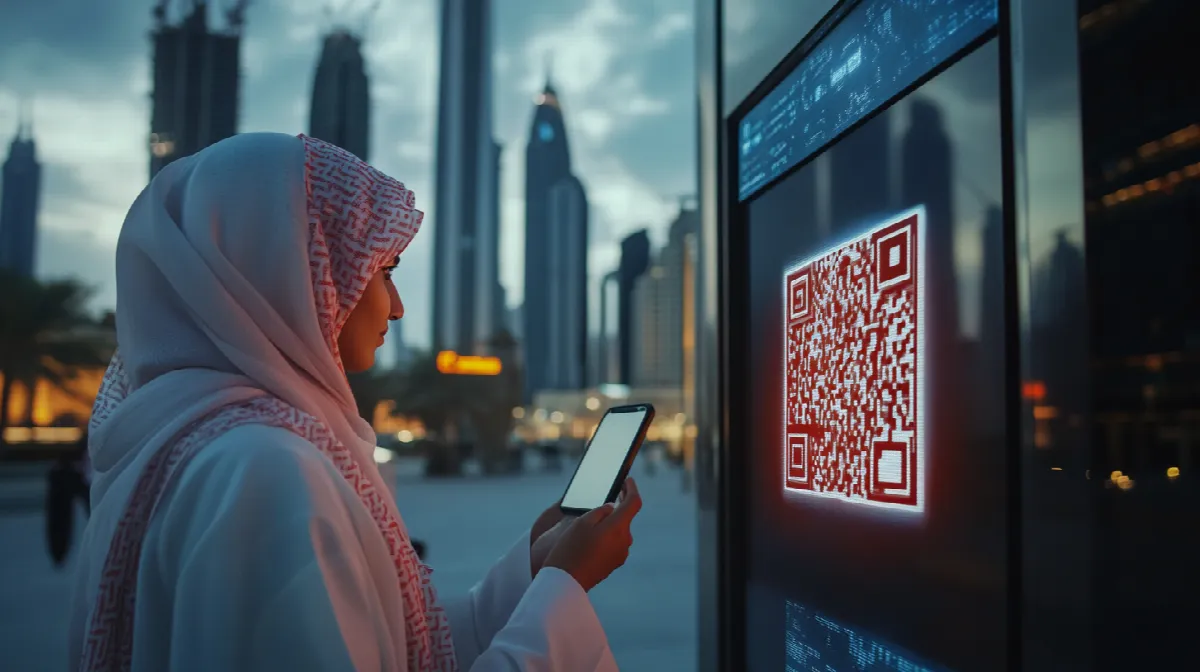
Fraudsters are placing fake QR code stickers on signposts, information boards, transport stations, and other public areas throughout the country. These counterfeit codes appear legitimate but connect to dangerous websites that:
- Request personal identification details
- Ask for banking information
- Install malware or ransomware on devices
- Mimic official institutions to gain trust
- Create convincing copies of legitimate banking websites
Dr Mohamed Al Kuwaiti, Head of the UAE Cybersecurity Council, explains that scammers use these codes to install “redirect links” that lead victims to fraudulent websites specifically created to execute online scams and steal sensitive information.

Real-World Examples of QR Scams in the UAE
Public Transport Scenario
Commuters at bus stations have reported seeing QR codes labelled “Scan to check the route.” Upon scanning, victims are redirected to suspicious websites requesting personal and banking details under the pretence of logging in to view transport information. Dubai’s Roads and Transport Authority has repeatedly warned residents about these specific scams.
Public Park Incident
Families visiting public parks have encountered QR code stickers that appear to offer park-related information. When scanned, these codes direct to fake websites requesting bank card photos and personal data, supposedly to purchase park-related items or services.
How to Identify Fake QR Codes
The Cybersecurity Council recommends these verification steps before scanning any QR code:
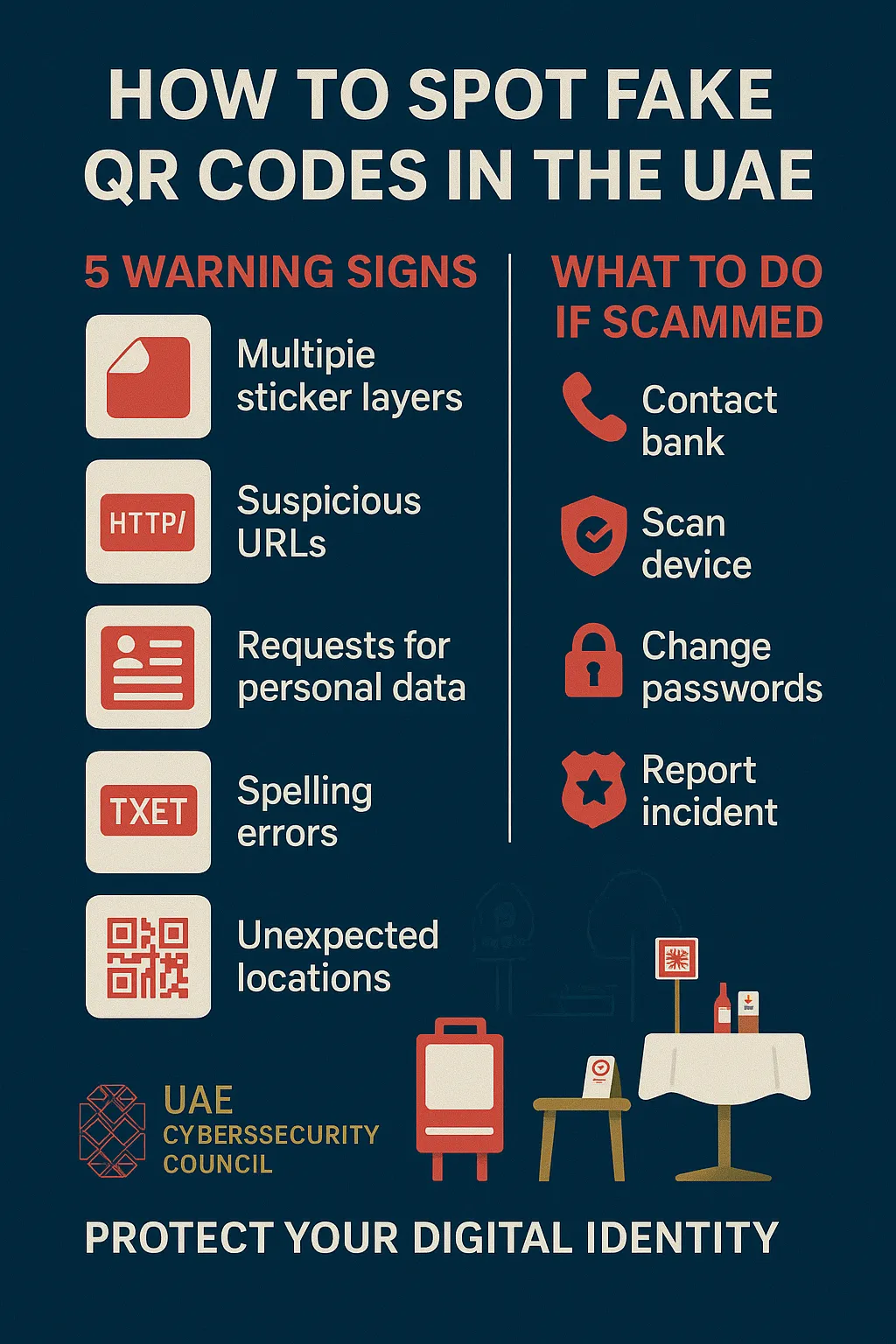
- Check the location: Only scan codes placed in trusted, official locations
- Verify the URL: Before opening, confirm the link begins with “https://”
- Look for suspicious signs: Multiple layers of stickers in the same spot often indicate tampering
- Be wary of data requests: Legitimate QR codes rarely ask for personal information immediately
- Watch for spelling errors: Fraudulent websites frequently contain spelling or grammatical mistakes
Essential Protection Measures
Dr Al Kuwaiti advises implementing these protective measures:
- Use reputable link-checking applications on your smartphone
- Enable all protective features on your mobile device
- Never scan QR codes from unknown or suspicious sources
- Be particularly cautious of codes in high-traffic public areas
- Consider using QR code scanner apps with built-in security features
What to Do If You’ve Been Scammed
If you suspect you’ve fallen victim to a QR code scam, take these immediate actions:
- Contact your bank immediately to freeze any registered cards
- Perform a comprehensive device scan using reliable antivirus software
- Change all passwords, especially for banking and important accounts
- Report the incident to relevant authorities, including local police and the UAE Cybersecurity Council
UAE’s Response to the Threat
The Cybersecurity Council is actively working to create a safer digital environment through several initiatives:
- Collaboration with digital service providers to secure QR code usage
- Implementation of stricter security standards
- Public awareness campaigns about cyber threats
- Continuous monitoring of cyber activity
- Proactive responses to emerging threats
The Council emphasises that public awareness remains the most vital factor in minimising harm and ensuring the safe use of QR code technology.
Staying Safe in a QR-Driven World
While QR codes offer convenience for marketing and accessing digital services, users must remain vigilant. The most effective protection is a healthy dose of scepticism when encountering QR codes in public spaces.
Before scanning, ask yourself:
- Does this QR code look professional and official?
- Is it placed in a logical, appropriate location?
- Do I trust the organisation that placed it there?
- What information might I be asked to provide after scanning?
Conclusion
As QR codes become increasingly integrated into our daily lives, so too does the risk of exploitation by cybercriminals. By staying informed, remaining cautious, and following the security guidelines provided by the UAE Cybersecurity Council, residents can protect themselves from these sophisticated scams.
Remember, in the digital age, verification before trust is not just good practice—it’s essential protection.
For more information or to report suspicious QR codes, contact the UAE Cybersecurity Council or your local police station.
Last updated: April 2025
This article is for informational purposes only and does not constitute cybersecurity advice.
Additional Reading Material
The UAE week, every Monday
The week's stories on jobs, visas, money and daily life in one short email. Unsubscribe in one click.