Trump’s 10% Tariffs on UAE: Impact on Economy and Consumer Prices
Financial experts analyse how Trump’s new 10% tariff policy will affect UAE businesses, trade relations, and consumer prices in 2025.
By Vadim Kouznetsov, published
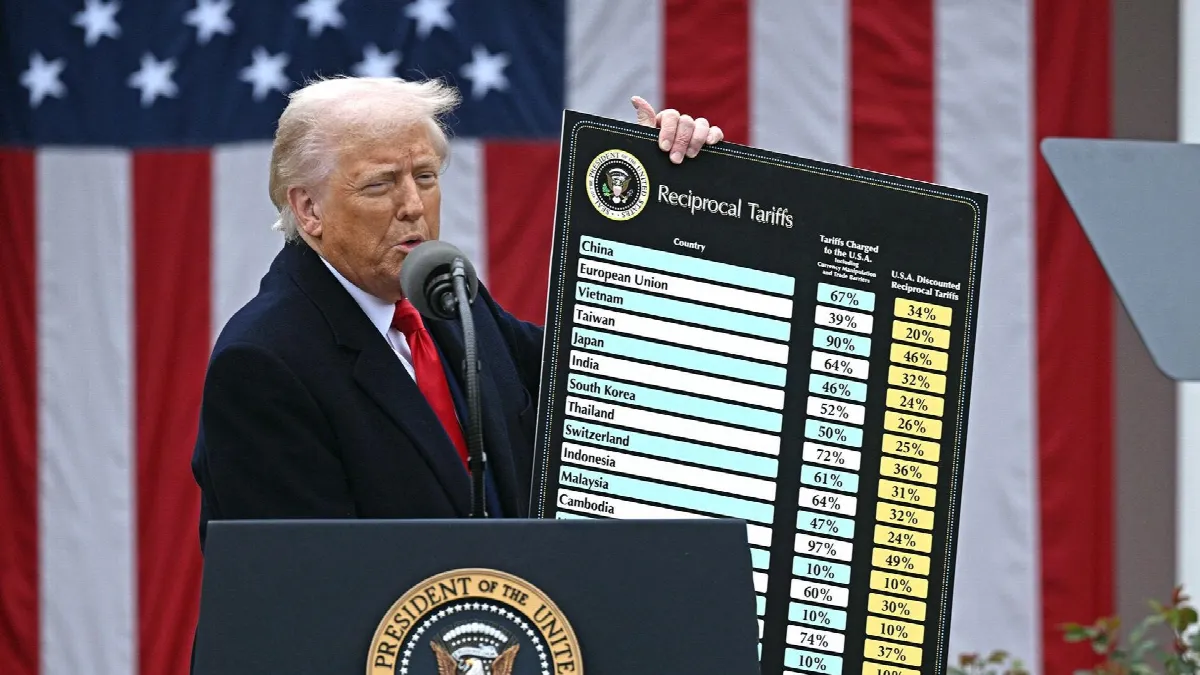
Donald Trump’s recent announcement of a 10 per cent tariff on imports from the UAE will have varying effects on the country’s economy, according to financial experts. While some sectors may face challenges, the overall impact is expected to be limited due to the UAE’s diverse economic partnerships.
New Tariff Policy Targeting Gulf Nations
On Wednesday, President Trump unveiled a broad tariff policy that includes a 10 per cent baseline duty on all US imports, with specific rates for different countries. Both the UAE and Saudi Arabia face a 10 per cent tariff, while Jordan will contend with a higher 20 per cent rate.
Hamza Dweik, Head of Trading and Pricing at Saxo Bank MENA, described the potential consequences as varied across different economic sectors.
“The tariffs will increase export costs for GCC businesses, potentially limiting their competitiveness in the American market,” Dweik explained. “This could lead to reduced export volumes and revenues for companies that rely heavily on US markets.”
He further noted that industries without sufficient market diversification would be particularly vulnerable to these new trade barriers.
Minimal Economic Impact with Strategic Opportunities
Despite concerns, Vijay Valecha, chief investment officer at Century Financial, offered a more optimistic assessment. “Given the relatively low volume of bilateral trade between the US and GCC members, the baseline tariffs are unlikely to significantly affect these countries’ economies,” he stated.
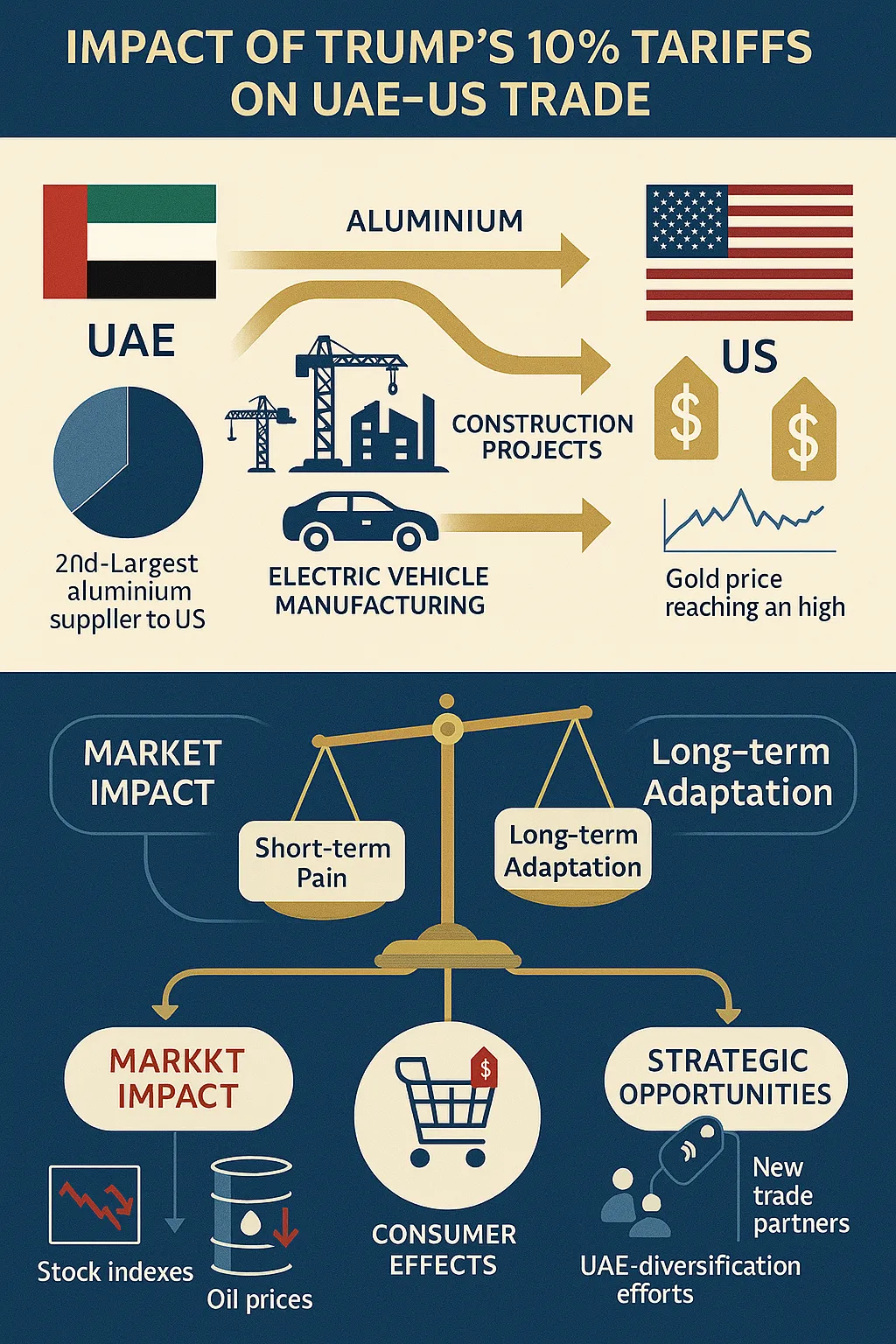
According to Valecha, the aluminium sector will experience the most direct effects, as GCC nations supply 16 per cent of America’s aluminium imports. “Bahrain, Oman, Qatar, and Saudi Arabia are the primary suppliers of aluminium to the US, with the UAE ranking as the second largest supplier after Canada,” he explained.
However, he highlighted that regional producers maintain a competitive advantage due to low energy costs. Additionally, any aluminium not purchased by the US could be redirected to local construction projects and domestic electric vehicle manufacturers, supporting the region’s economic diversification efforts.
Global Market Reaction
The announcement triggered immediate reactions across global markets, with many analysts concerned about potential trade wars as countries consider retaliatory measures.
US stocks experienced significant drops, with the Dow Jones Industrial Average falling 1,400 points (3.3 per cent) and the Nasdaq Composite declining by 5 per cent. Brent crude, the global oil benchmark, decreased by 7 per cent to $69.71 per barrel. Major multinational companies including Nike and Apple also saw their shares decline.
Josh Gilbert, Market Analyst at eToro, commented: “Trump’s aggressive tariff rollout adds more uncertainty to global markets. The concern now involves potential slowdown in global growth, continuing inflation risks, and escalating trade tensions.”
Consumer Impact and Business Response
Several analysts predict that consumers will ultimately bear the financial burden of these tariffs.
“One thing is certain—consumers will pay higher costs and feel the most pain,” said Nayeem Aslam, Chief Investment Officer at Zaye Capital. Gold prices reached an all-time high following the announcement, and various consumer products are expected to become more expensive.
Joseph Dahrieh, managing principal at forex company Tickmill, noted potential ripple effects: “The tariffs are likely to increase risks for UAE exporters, affecting trade balance and businesses. Additionally, a global growth slowdown and oil price volatility pose some risks.”
International companies are carefully evaluating their next steps. DHL told Khaleej Times they remain positive about growth prospects but are monitoring the situation closely. “We need to assess whether this leads to broader distancing of the US from the rest of the world and evaluate potential long-term effects on global trade,” a spokesperson said.
Oil Demand and Investment Concerns
Dilin Wu, research strategist at Pepperstone, identified two key factors affecting the UAE: oil demand and investment flows.
“As one of the Middle East’s top oil exporters, the UAE is deeply connected to global energy demand,” Wu explained. “If trade tensions slow the global economy and weaken manufacturing activity, major economies may reduce energy consumption, potentially lowering oil prices and directly affecting the UAE’s export revenues.”
Wu added that the UAE’s position as a logistics hub and free trade zone could be compromised if multinational corporations restructure supply chains to avoid additional costs, potentially affecting capital inflows and economic growth.
Key Takeaway
While Trump’s 10% tariff on UAE imports presents immediate challenges for certain sectors, particularly aluminium, the overall economic impact is expected to be manageable due to the UAE’s diversified economy and competitive advantages in energy costs. However, consumers may face higher prices, and business leaders should prepare for possible market volatility as global trade tensions evolve.
Stay updated with the latest business news from the UAE and Gulf region on JobXDubai.
Additional Reading Material
The UAE week, every Monday
The week's stories on jobs, visas, money and daily life in one short email. Unsubscribe in one click.