Four-Day Work Week Success: Global Studies Show Higher Productivity in 2024
Discover how countries worldwide are adopting 4-day work weeks, backed by research showing increased productivity, better health outcomes, and work-life harmony.
By Vadim Kouznetsov, published

The traditional five-day work week is experiencing a significant transformation as countries worldwide embrace a four-day schedule, with research demonstrating impressive benefits for both employees and businesses.
Key Findings from Global Implementation
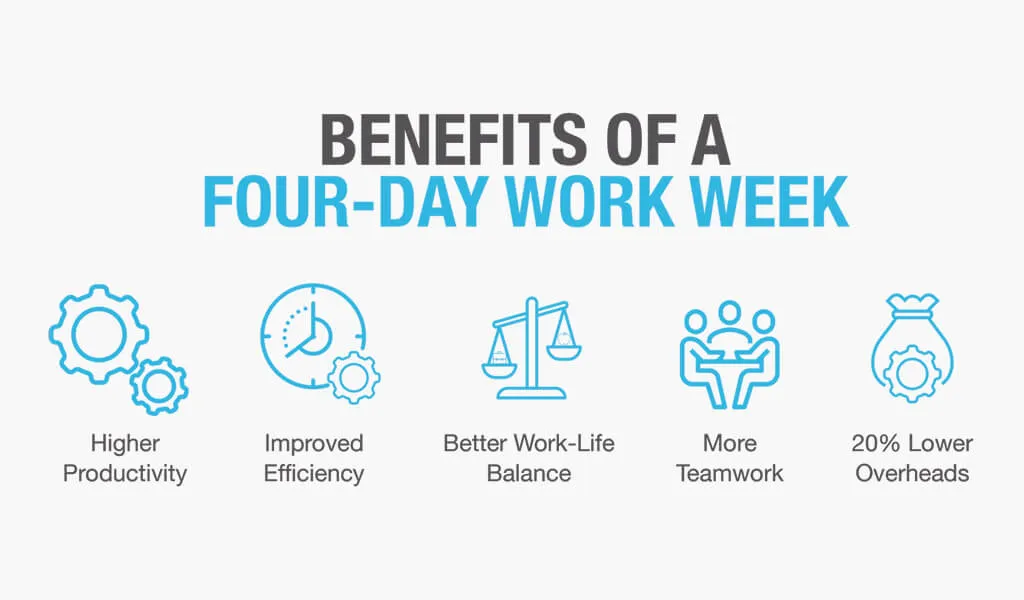
Recent studies in 2024 reveal that four-day work weeks lead to substantial improvements in various aspects of workplace performance:
- British companies participating in the UK’s largest trial reported a 65% decrease in sick leave and 57% lower staff turnover. The success rate speaks volumes – 92% of participating businesses maintained the shortened schedule, with 18 organisations making it permanent.
- Japanese businesses witnessed a 40% increase in productivity during their trials, alongside reduced operational costs. Tokyo’s government employees now pioneer this approach, targeting improved family life and addressing the country’s declining birth rates.
- Icelandic implementation shows remarkable staying power, with 86% of the workforce now having access to reduced hours without pay cuts. The country maintains strong economic performance, boasting a 4.1% growth rate and 3.6% unemployment rate in 2023.
Health and Productivity Benefits
Research from Cambridge University’s Digital Futures at Work Research Centre highlights significant advantages:
- Mental health improvements with reduced anxiety and fatigue levels
- Enhanced physical wellbeing through decreased workplace stress
- Better work-life integration leading to increased job satisfaction
- Improved focus and creativity during working hours
- Reduced environmental impact from decreased commuting
Economic Impact and Business Performance
The shift to shorter weeks demonstrates positive economic outcomes:
- Companies maintain or increase productivity levels
- Business revenues show average increases of 1.4%
- Reduced operational costs through lower energy consumption
- Higher employee retention rates
- Improved talent attraction capabilities
Global Implementation Approaches
Different countries adopt varied strategies:
- Spain allocated €50 million for a three-year trial involving 200 companies
- Belgium allows workers to compress full hours into four days
- German companies implement flexible arrangements without wage reductions
- Brazilian organisations report enhanced employee creativity and reduced stress levels
Looking Forward
The four-day work week represents more than a scheduling change – it’s reshaping workplace culture. With mounting evidence supporting its benefits, more organisations are likely to adopt this approach, prioritising output quality over time spent at work.
This workplace revolution suggests a future where productivity aligns with employee wellbeing, creating sustainable business practices that benefit both companies and their workforce.
Additional Reading Material
The UAE week, every Monday
The week's stories on jobs, visas, money and daily life in one short email. Unsubscribe in one click.