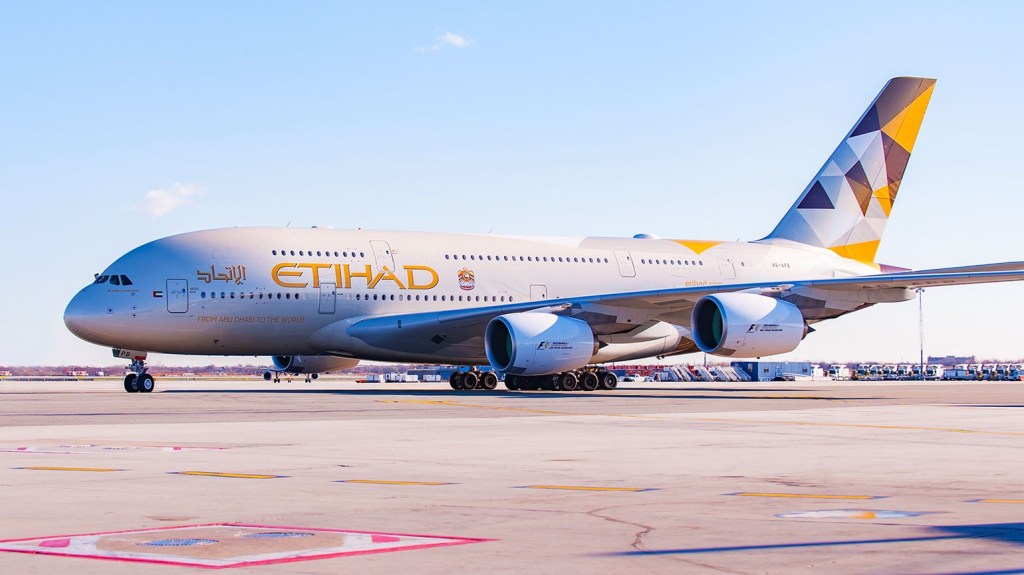
In a bold move to capitalise on Dubai’s airport congestion, Etihad Airways is positioning Abu Dhabi as the premier hub for long-haul travellers in the Gulf region. The airline aims to more than double its passenger numbers by 2030, setting an ambitious target of 30 million annual passengers.
Abu Dhabi: The New Gateway for International Travel
Etihad’s CEO, Antonoaldo Neves, sees a significant opportunity in Abu Dhabi’s underutilised capacity. “From an airline perspective, Dubai is really congested right now,” Neves told the Financial Times. “There is not a lot of capacity left in Dubai, and… the UAE now has Abu Dhabi to grow.”
This strategy comes as Dubai International Airport, handling 87 million passengers in 2023, nears its capacity limits. While a new airport is planned in Dubai, it won’t be operational for several years, leaving a gap that Etihad is eager to fill.
Etihad’s Unique Market Approach
Rather than competing directly with Emirates and Qatar Airways on ultra-long-haul routes, Etihad is focusing on developing new markets. The airline is increasing its frequency to destinations within a one to three-hour radius of Abu Dhabi, including Mumbai, Oman, and Riyadh.
Expansion Amid Global Aircraft Shortage
Neves remains confident about Etihad’s expansion plans, citing the global shortage of aircraft and spare parts as a barrier to overexpansion. “The market is so artificially constrained,” he noted, highlighting the current demand for planes in the industry.
Potential IPO on the Horizon
While Etihad’s owner, ADQ, is considering listing the airline via an IPO in Abu Dhabi, Neves emphasised that the airline’s $7 billion expansion plan is not dependent on external capital. “I need to be ready. That’s driven by management. The time of the IPO is driven by the shareholder. Because we don’t need cash,” he stated.
Navigating Regional Challenges
The airline has had to adapt to regional conflicts, suspending flights to Beirut amidst escalating tensions between Israel and Hezbollah. Etihad relies on a combination of internal risk assessments and external intelligence to make decisions about flight safety in volatile regions.
As Etihad Airways charts its course for growth, it’s clear that Abu Dhabi is set to play an increasingly significant role in the competitive landscape of Middle Eastern aviation. With its strategic focus on new markets and leveraging Abu Dhabi’s capacity, Etihad is positioning itself as a key player in the future of long-haul air travel.







Leave a comment