Google Maps Launches AI-Powered Features for Smarter Navigation in India
Discover how Google Maps’ new AI-driven features are revolutionizing navigation in India, from smart routing to EV charging information.
By Vadim Kouznetsov, published
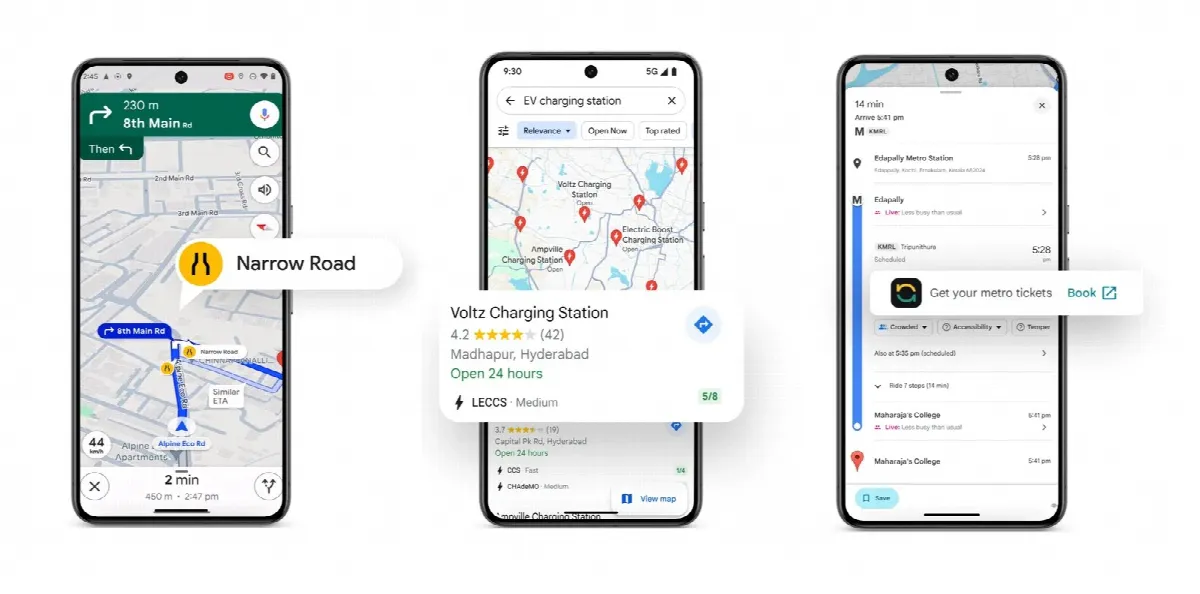
In a bold move to enhance user experience and stay ahead in the competitive digital mapping landscape, Google Maps has rolled out a suite of cutting-edge features tailored for the Indian market. These advancements, powered by artificial intelligence and local partnerships, promise to revolutionize how people navigate through India’s diverse urban terrain.
AI-Powered Routing: Navigating India’s Urban Maze
One of the standout features is the AI-driven routing capability designed to minimize the use of narrow roads for four-wheeler drivers. This innovation addresses a common challenge faced by motorists in India’s bustling cities.
Google’s approach leverages an AI model specifically developed for Indian roads. It integrates multiple data points, including:
- Satellite imagery
- Street view data
- Road type information
- Distance between buildings
- Paved section details
By analyzing these factors, the AI can accurately estimate road widths across the country. This data is then used to refine existing routing algorithms, helping drivers of larger vehicles avoid narrow streets without significantly impacting travel time or distance.
The feature is currently being rolled out on Android devices in eight major cities:
- Hyderabad
- Bengaluru
- Chennai
- Coimbatore
- Indore
- Bhopal
- Bhubaneswar
- Guwahati
Google plans to expand this feature to iOS devices and additional cities in the near future.
Flyover Callouts: Anticipating Your Route
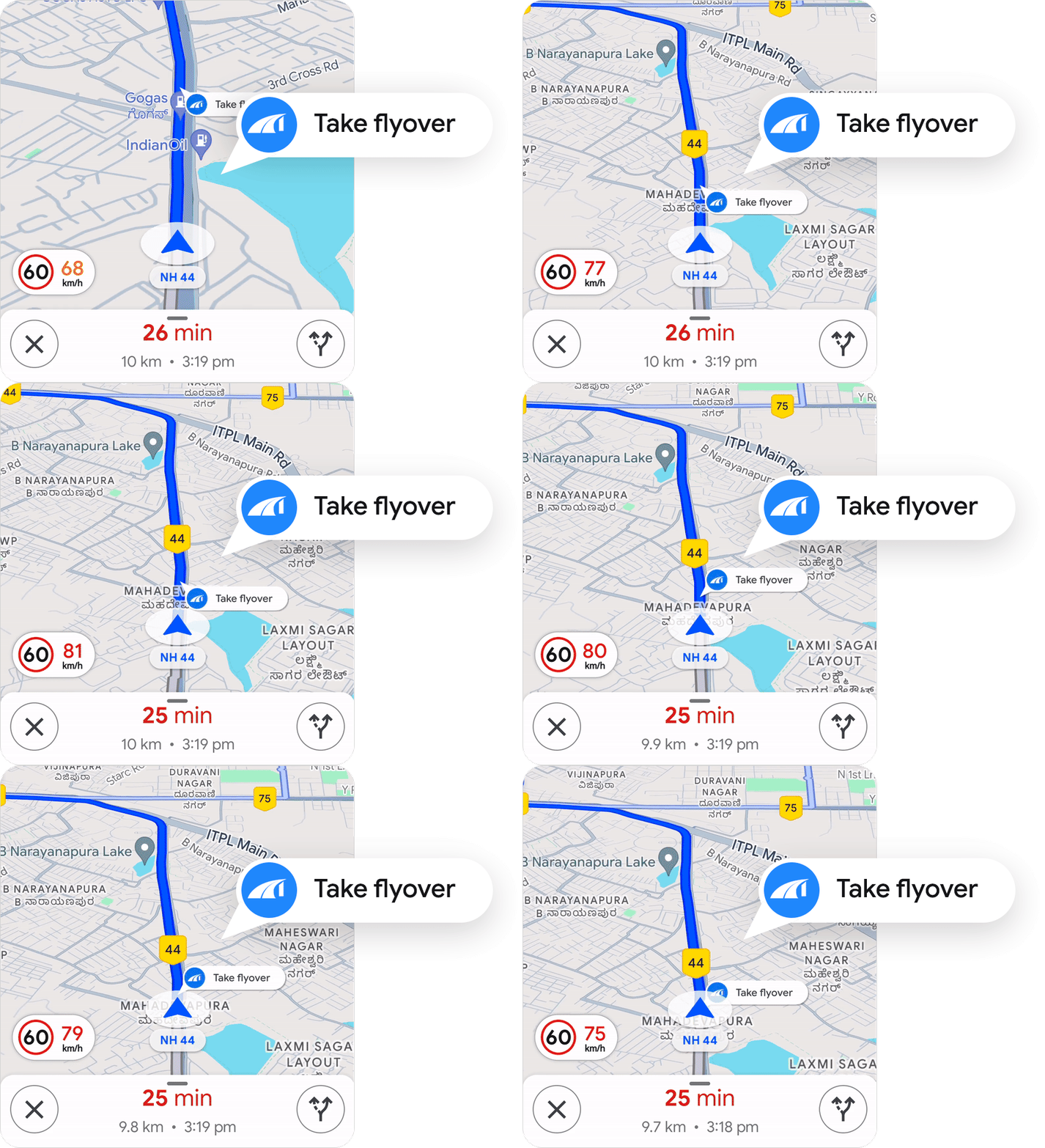
Another noteworthy addition is the introduction of flyover callouts along recommended routes. This feature alerts drivers to upcoming flyovers, allowing them to prepare in advance and navigate more smoothly onto elevated roadways.
Empowering EV Drivers: Charging Station Information at Your Fingertips
As India moves towards a greener future, Google Maps is stepping up to support electric vehicle (EV) drivers. The app now provides comprehensive information about EV charging stations, accessible through both Google Maps and Google Search.
To accomplish this, Google has partnered with leading EV charging providers in India, including:
This collaboration has resulted in the addition of authoritative information for over 8,000 charging stations, representing a significant portion of India’s EV infrastructure.
Expanding Live Transit Crowdedness Feature
Google Maps is also expanding its live transit crowdedness feature to eight cities in India. This tool helps commuters make informed decisions about their travel, potentially reducing congestion during peak hours.
The Competitive Landscape: Google vs. Ola
These updates come at a crucial time for Google Maps, as it faces increasing competition from homegrown challenger Ola Maps. Recently, Google announced a significant price cut of up to 70% for its Google Maps platform for developers, effective from August 1, 2024.

This move follows Ola Founder and CEO Bhavish Aggarwal’s open invitation to Indian developers to switch from Google Maps, offering incentives such as one-year free access to Ola Maps.
Looking Ahead: The Future of Digital Mapping in India
Google’s commitment to innovation in the Indian market is clear. As Daniel and Lalitha Ramani, GM at Google Maps India, stated in a recent blog post:
“These new features reaffirm our commitment to making digital mapping even more helpful for users, businesses, developers and society at large. We’re excited to continue our journey of innovation and build the future of Google Maps right here in India.”
As the digital mapping landscape continues to evolve, users in India can expect more personalized, efficient, and sustainable navigation solutions. Whether you’re driving an EV, navigating complex urban areas, or simply trying to avoid traffic, Google Maps is working to make your journey smoother and more informed.
Stay tuned for more updates as Google Maps continues to shape the future of navigation in India and beyond.
The UAE week, every Monday
The week's stories on jobs, visas, money and daily life in one short email. Unsubscribe in one click.