UAE Sugar Tax 2026: How Price Hikes Are Pushing Consumers Toward Healthier Drinks
UAE’s new tiered sugar tax is changing buying habits. High-sugar drinks cost more, zero-sugar options sell faster. See how the new excise system works in 2026.
By Vadim Kouznetsov, published
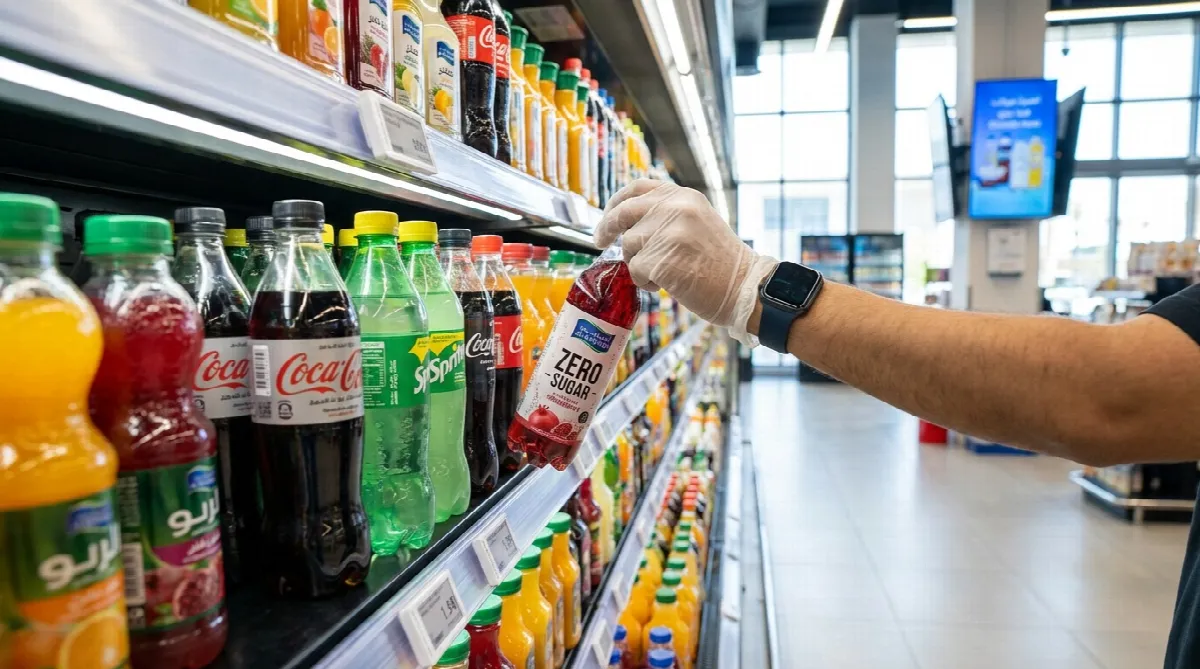
High-sugar drinks are losing shelf space in UAE supermarkets. Since the new tiered sugar tax took effect on January 1, 2026, retailers report a clear shift: sales of sugary beverages are dropping while zero-sugar and low-sugar alternatives are flying off shelves.
The Federal Tax Authority’s new “tiered-volumetric model” replaced the previous flat 50% excise tax on all sugary drinks. Now, beverages are taxed based on their actual sugar content. The result? High-sugar drinks cost more, low-sugar drinks cost less, and consumers are voting with their wallets.
What Changed on January 1, 2026?
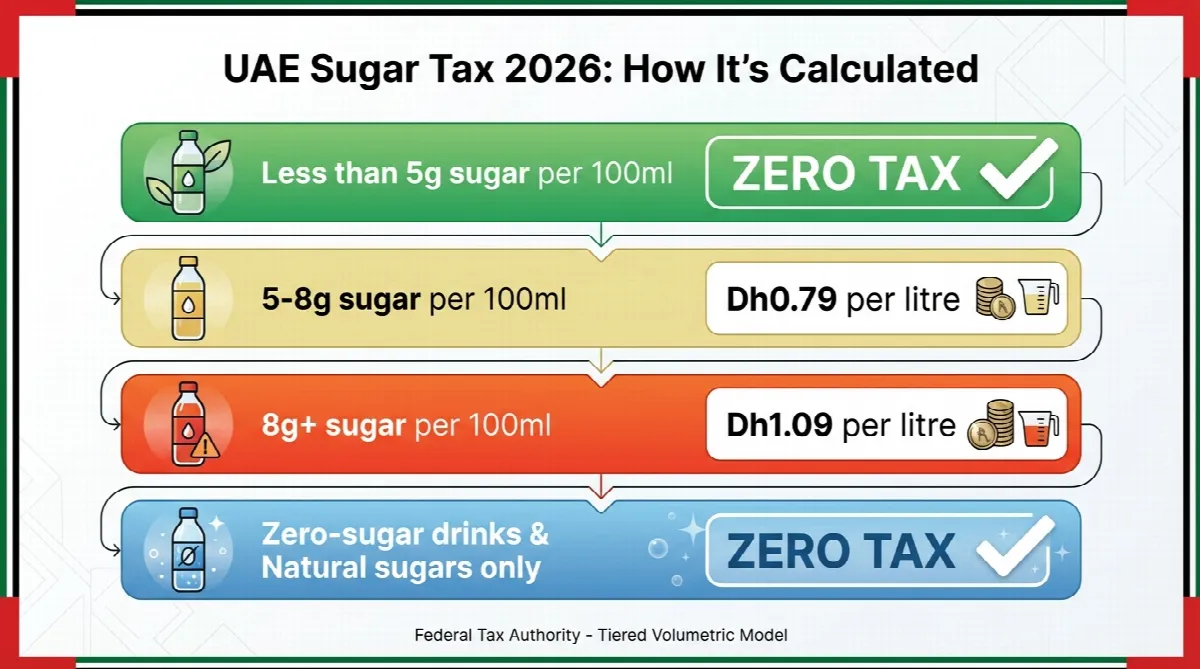
The new UAE excise tax system calculates tax based on total sugar content—including natural sugar, added sugar, and artificial sweeteners—per beverage.
Here’s the new tax structure:
| Sugar Content per 100ml | Tax Rate |
|---|---|
| Less than 5g added sugar | Zero tax |
| 5-8g added sugar | Dh0.79 per litre |
| 8g or more added sugar | Dh1.09 per litre |
| Only artificial sweeteners (no added sugar) | Zero tax |
| Only natural sugars | Zero tax |
This applies to ready-to-drink beverages and concentrates, powders, gels, and extracts that can be converted into sweetened drinks.
The key difference: a drink with 6g of sugar per 100ml now attracts only Dh0.79 tax compared to Dh5 under the previous flat 50% system on a Dh10 retail product.
What Retailers Are Seeing on the Ground
Dr Dhananjay Datar, Chairman and Managing Director of Adil Group of Supermarkets, confirmed the immediate impact.
“Since the new excise tax came into effect, customers have noticed higher prices on drinks that contain more sugar. This has influenced buying decisions at supermarkets,” he told Khaleej Times.
He noted demand for high-sugar drinks has reduced while low-sugar and zero-sugar options are becoming more popular—driven by both affordability and growing health awareness.
“Sales of drinks with high sugar content have slowed down, while low-sugar and zero-sugar drinks are becoming more popular. Price changes, along with better awareness, are encouraging shoppers to choose healthier alternatives.”
A spokesperson from a major UAE retailer with GCC-wide presence echoed these observations: “We expect demand for high-sugar drinks to ease, while low and zero-sugar options should see better demand.”
Why Some Drinks Are Now Cheaper
Tom Harvey, General Manager for Commercial at Spinneys Dubai, explained the logic during a Dubai Eye Business Breakfast interview.
“This is a far more progressive and logical way to tax products to encourage healthier behaviours by making those drinks that have less sugar, and especially those who got no sugar, much, much more affordable for consumers.”
He pointed out that consumers should actually be paying less for low-sugar drinks now. Under the old system, all sugary drinks faced a flat 50% tax regardless of sugar content. Under the new model, drinks with less sugar attract lower taxes—translating to lower shelf prices.
Brands Are Already Reformulating Products
Retailers expect beverage manufacturers to accelerate their shift toward healthier formulations.
“Many beverage brands have started reducing sugar levels or launching healthier options to adjust to the new tax system,” Dr Datar observed.
The spokesperson from the major UAE retailer predicted: “The tax will encourage brands to bring in more low-sugar options, giving consumers healthier choices.”
This reformulation trend is deliberate. By reducing sugar content to fall below the 5g per 100ml threshold, manufacturers can eliminate excise tax entirely—creating a direct financial incentive to produce healthier products.
How It Affects Your Shopping Bill
Anurag Chaturvedi, CEO of Andersen UAE, explained the practical impact with an example.
A drink with a retail price of Dh10 containing 6g of sugar per 100ml will now have Dh0.79 excise tax instead of Dh5 under the previous system.
The tax also applies to concentrates, syrups, and powders based on the final prepared volume—how many litres of ready-to-drink servings the product produces after mixing or dilution.
For UAE residents managing household budgets, this creates a straightforward incentive: switching to lower-sugar options means lower grocery bills.
What Businesses Need to Do
For manufacturers, importers, and distributors, compliance extends beyond pricing adjustments.
Chaturvedi outlined the key requirements:
Sugar tier verification: Businesses must confirm which tax tier applies to each product, typically requiring sugar testing lab reports from certified laboratories to support declared sugar content.
Product registration updates: Companies need to review and update product registrations under the excise framework so the correct category, sugar level, and documentation are reflected in the system.
Record-keeping alignment: Businesses should strengthen internal record-keeping, aligning ingredient information, labels, import documentation, and stock records so excise calculations are consistent and defensible during audits.
“This becomes important not just for pricing, but also to avoid products being treated as higher-sugar by default during audits or reviews,” Chaturvedi noted.
Part of a Broader Health Push
The sugar tax reform aligns with GCC-wide standards and forms part of broader public health initiatives to reduce sugar consumption across the region.
The UAE has implemented several health-focused regulations in recent years, including Abu Dhabi’s nutri-mark labelling system that helps consumers make informed food choices through clear nutritional grading.
Dr Datar sees the tax as a positive step for public health.
“This new tax is a positive step towards promoting healthier lifestyles. It not only helps reduce excessive sugar consumption but also encourages brands to offer better and healthier choices. In the long run, this benefits both consumers and the overall health of the community.”
UAE Consumers Are Becoming More Health-Conscious
The tax change arrives as UAE consumers increasingly prioritise health in their purchasing decisions.
“UAE consumers are becoming more health-conscious and paying closer attention to what they consume, especially when it comes to sugar,” Dr Datar noted. “Many families now prefer drinks with less or no added sugar, and this trend is steadily growing across all age groups.”
This shift reflects a broader cost of living awareness among UAE residents, who are increasingly weighing both health and financial factors in their daily choices.
Key Takeaway
The UAE’s tiered sugar tax is working as intended. By taxing beverages based on actual sugar content rather than applying a flat rate, the system creates clear financial incentives for consumers to choose healthier options and for manufacturers to reformulate products. Retailers confirm high-sugar drinks are losing ground while zero-sugar and low-sugar alternatives gain market share. For consumers, the message is simple: lower sugar means lower prices.
FAQs
How is the new UAE sugar tax calculated?
The tax is based on added sugar content per 100ml. Drinks with less than 5g added sugar face zero tax. Drinks with 5-8g pay Dh0.79 per litre. Drinks with 8g or more pay Dh1.09 per litre. Beverages containing only natural sugars or only artificial sweeteners are tax-exempt.
Will I pay more for all soft drinks under the new tax?
Not necessarily. Drinks with lower sugar content may actually cost less than before. The previous flat 50% tax applied to all sugary drinks regardless of sugar content. Under the tiered system, low-sugar drinks attract lower taxes, which can translate to lower retail prices.
Are fruit juices affected by the sugar tax?
Beverages containing only natural sugars with no added sugar or other sweeteners are exempt from excise tax. However, if a fruit juice contains added sugar or sweeteners, it falls under the tiered tax structure based on its total sugar content.
Does the tax apply to concentrates and powdered drinks?
Yes. The tax applies to concentrates, syrups, powders, gels, extracts, and any form that can be converted into a sweetened drink. The tax is calculated based on the final prepared volume—how many litres of ready-to-drink servings the product produces after mixing or dilution.
Why are zero-sugar drinks now more popular in the UAE?
Zero-sugar drinks face no excise tax under the new system, making them more affordable compared to high-sugar alternatives. Combined with growing health awareness among UAE consumers, this price advantage is driving increased demand for sugar-free options in supermarkets.
Further Reading
The UAE week, every Monday
The week's stories on jobs, visas, money and daily life in one short email. Unsubscribe in one click.