Emirati AI Researcher Revolutionizes Driverless Car Technology
Discover how Fatima Al Khouri, an Emirati researcher, is advancing driverless car technology through innovative AI and machine learning techniques at MBZUAI.
By Vadim Kouznetsov, published
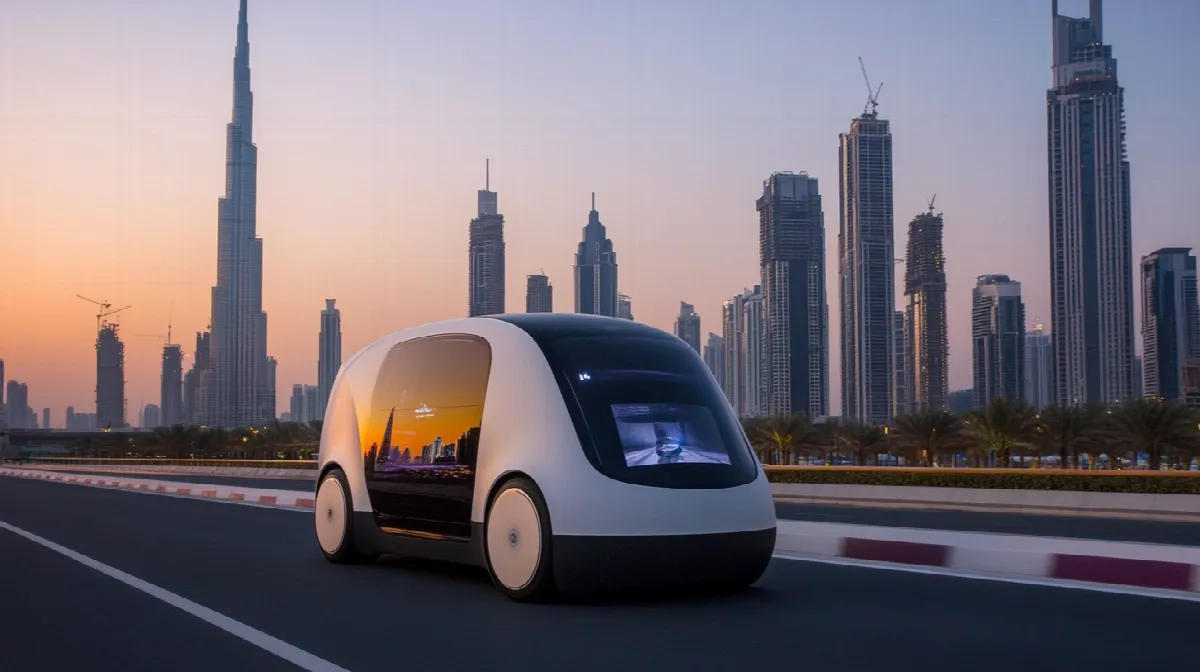
In the bustling city of Abu Dhabi, an Emirati researcher is making waves in the world of artificial intelligence and autonomous vehicles. Fatima Ahmed Khalil Mohammed Al Khouri, once a newcomer to computer science, is now at the forefront of teaching driverless cars how to read road signs.
From Transportation Engineering to AI Innovation
Fatima’s journey began with a bachelor’s degree in transportation engineering from the Higher Colleges of Technology. Her passion for improving mobility led her to pursue a master’s in sustainable critical infrastructure at Khalifa University. However, it was her fascination with AI-powered self-driving vehicles that propelled her into the realm of machine learning.
“I’ve always had a passion for transportation,” Fatima explains. “It influences the economy, business, and our daily lives in so many ways. That’s why I feel like it’s my mission to contribute to making the UAE’s transport system the very best in the world.”
Overcoming Challenges at MBZUAI
Despite lacking a background in computer science, Fatima was accepted into the prestigious Mohamed bin Zayed University of Artificial Intelligence (MBZUAI) for her master’s in machine learning. The transition wasn’t easy, but her determination shone through.
“When I first started, it was very challenging because I had to learn the basics from scratch while most of the other students already had an IT or computer science background,” Fatima recalls. “I put in a lot of extra hours of study to catch up, but it was very rewarding to stretch myself and then be able to combine this new knowledge with my existing areas of expertise.”
Groundbreaking Research in Traffic Sign Recognition
At MBZUAI, Fatima focused her research on using machine learning to recognize traffic signs using “transformer model architecture.” This innovative approach tackles the complexities of machine vision, including variable viewing angles, lighting conditions, and sign proximity.
“The objective of my research was to investigate the different variants of vision transformers and develop a suitable methodology to enhance their ability to recognize signs correctly by eliminating variables,” she explains.
Fatima’s study utilized a dataset of 1,150 traffic signs provided by Abu Dhabi’s AD Mobility (formerly the Integrated Transport Centre), complemented by a larger German dataset of 50,000 images. This combination allowed her to train the algorithm to extract relevant data amidst various “noise” and variables.
“I’m proud of the fact that this is the first comprehensive study of its type that utilizes UAE data,” Fatima states. “We believe we’ve achieved very good accuracy in comparison to other journals and publications that have conducted similar research, and we have found ways to improve the accuracy of recognition.”
A Bright Future in AI and Transportation
Fatima’s hard work and innovation have paid off. She has been accepted to pursue her PhD at MBZUAI, where she plans to continue her research in enhancing the capabilities of driverless vehicles.
“I want to extend my sincere thanks and gratitude to my country and our wise leadership for providing this opportunity to learn and research AI and machine learning,” she says. “I aim to pay back this trust by using the power of machine learning to solve key transport and infrastructure challenges.”
As autonomous vehicles become increasingly prevalent on our roads, researchers like Fatima Al Khouri are paving the way for safer, more efficient transportation systems. Her journey from transportation engineering to cutting-edge AI research serves as an inspiration to aspiring scientists and a testament to the UAE’s commitment to technological innovation.
With continued support and dedication, Fatima’s work could revolutionize how driverless cars interact with their environment, bringing us one step closer to a future of seamless, AI-powered mobility.
The UAE week, every Monday
The week's stories on jobs, visas, money and daily life in one short email. Unsubscribe in one click.